

Key Takeaways
The Queclink GL51CG is the best GPS asset tracker for UK businesses looking for long-lasting, reliable tracking of non-powered assets. Its high-capacity battery and robust connectivity provide peace of mind with minimal maintenance, making it ideal for assets that need to be tracked over several years without frequent intervention. From practical experience, this device combines durability, discreet installation, and excellent battery life, which reduces total cost of ownership and operational hassle.
Other notable models include:
Battery-powered GPS trackers are ideal for unpowered assets – trailers, containers, heavy equipment, horse boxes, and machinery that have no ignition power to tap into. GPS asset trackers combine durable design and high-accuracy tracking to provide real-time location, geofencing, and historical tracking to enhance security.For valuable assets sitting in remote yards or moving between depots, location visibility makes sense as an operational requirement, not a luxury.
This guide compares eight devices across battery architecture, UK cellular compatibility, weatherproofing, and total cost of ownership. EasyNet Technologies, is a trusted supplier specializing in GPS asset tracking solutions, ensuring reliable access to these devices and expert support for UK businesses.
- GL30MEU – Best for depot-recharged trailer fleets with indoor positioning needs
- GL601CEU – Best for solar-powered container and trailer tracking with zero maintenance
- Oyster3 – Best for field-replaceable battery operations on remote outdoor assets
- Barra Edge – Best for indoor/outdoor mixed tracking with Wi-Fi fallback
- Asset5 – Best for BLE 6.0 connectivity and industrial-grade environments
- ATC700 – Best for UKCA compliance requirements and compact rechargeable form factor
- LL702 – Best for sheltered magnetic-mount applications with budget constraints
- Other notable models include:
Battery-Powered GPS Asset Trackers Compared – UK Market (2026)
| 1 | 2 | 3 | 4 | 5 | 6 | 7 | 8 | |
|---|---|---|---|---|---|---|---|---|
| Device | Queclink GL51CG | Queclink GL30MEU | Queclink GL601CEU | Digital Matter Oyster3 | Digital Matter Barra Edge | Ruptela Asset5 | Teltonika ATC700 | Jimi IoT LL702 |
| Best For | Long-life non-powered assets | Trailers and containers | Solar containers, trailers, rail wagons | Long-life outdoor assets, field-replaceable batteries | Indoor/outdoor mixed, pallets, cargo, tools | Compact 4G with BLE 6.0 | Compact rechargeable, workforce + tools | Magnetic-mount, sheltered/indoor assets |
| Battery / Power | Li-MnO₂ 7,000mAh non-rechargeable – up to 2,160 days (1× daily) | Li-Polymer 650mAh rechargeable – up to 190 days (1× daily) | 12,000mAh + solar – up to 5yr (no solar) / 10yr (with solar) | 3× AA user-replaceable – up to 10 years (1× daily) | 2× AA user-replaceable – up to 10 years (1× daily) | 2× ER14505M LiSOCl₂ replaceable – up to 3 years | Li-Po 1,000mAh rechargeable – up to 3 years (low-freq mode) | Li-MnO₂ 4,200mAh fixed non-rechargeable – up to 3 years (low-freq) |
| Protocol | LTE Cat 1 | LTE Cat M1/NB2 + 2G fallback | LTE Cat 1 + 3G/2G fallback | LTE-M / NB-IoT | LTE-M / NB-IoT | LTE Cat1.bis + 2G fallback | LTE Cat 1 + 2G fallback | LTE Cat 1 + 2G GSM |
| IP | Not stated | IP67 | IP67 | IP68 + IK07 | IP68 + IK07 | IP68 | IP65 | Not stated |
| Value Rating | Best | Best | Best |
How Easynet Technologies Chose the Best GPS Asset Trackers
If you are searching for solutions related to tracking trailers, containers, equipment, or other non-powered assets, this guide is designed to meet those specific business needs.
Battery-powered GPS trackers are essential for businesses managing assets without onboard power. These devices provide reliable, long-term location visibility without the need for wiring or frequent maintenance, making them ideal for industries such as logistics, construction, and agriculture.
We evaluated each tracking device against five criteria:
Wired GPS trackers provide real-time tracking for powered vehicles, and OBD-II plug-in trackers are easy to install but visible. Hardwired trackers eliminate battery concerns but require professional installation.
For non powered assets, none of those options apply – the devices in this guide operate independently on internal batteries. For businesses interested in comprehensive vehicle and asset management, exploring fleet telematics solutions can provide broader operational insights
- UK LTE Band 20 (800 MHz): Essential for rural and obstructed coverage. GPS accuracy typically ranges from 8 to 15 feet (roughly 2.5 to 5m) in open areas, but without proper cellular connectivity, location data never reaches your platform.
- Battery architecture: Non-rechargeable, rechargeable, solar, or user-replaceable – each has trade-offs for deployment duration and maintenance cost.
- IP rating for UK conditions: GPS asset trackers need to be weatherproof for outdoor use in challenging environments. IP67/IP68 is the baseline for exposed UK deployments.
- Platform independence: All devices here support open protocol integration – no vendor lock-in.
- Authorized UK supply: Devices from distributors with UK stock reduce lead times and import risk.
- We evaluated each tracking device against five criteria:
Differences Between B2B vs. Consumer GPS Trackers
When selecting a GPS tracker, it is crucial to understand the fundamental differences between business-to-business (B2B) and consumer-grade devices, as their design, functionality, and use cases vary significantly.
Consumer GPS trackers primarily target individual car owners seeking theft recovery solutions for personal vehicles. These devices often require insurance-approved certifications such as Thatcham S5 or S7, ensuring compliance with UK insurance standards. Consumer trackers typically rely on recovery networks and are sold through car accessory retailers. They are designed for short-term use, with battery life and update frequency tailored for personal use rather than industrial applications.
In contrast, B2B GPS asset trackers cater to commercial needs, focusing on tracking non-powered assets like trailers, containers, construction machinery, and equipment. These trackers operate independently via cellular networks, providing reliable location data over months or even years without needing a direct power source. Their rugged construction ensures durability in harsh outdoor environments typical of logistics yards, construction sites, and remote locations. Moreover, B2B trackers seamlessly integrate with fleet management platforms, enabling businesses to monitor asset utilization, optimize operations, and enhance security.
All devices featured in this guide are battery-powered cellular GPS asset trackers, requiring no hardwiring or ignition power. This makes them ideal for assets without onboard power, offering long-term deployment with minimal maintenance. The buying criteria for B2B trackers emphasize battery longevity, cellular compatibility (especially UK LTE Band 20 support), weatherproofing (IP67/IP68 ratings), and platform-agnostic integration capabilities–factors that differ substantially from consumer GPS tracker considerations.
Key differences at a glance:
Understanding these distinctions helps UK fleet managers, logistics operators, and equipment managers choose the right GPS asset tracker tailored to their specific operational demands, ensuring effective asset visibility and security.
- Purpose: Consumer trackers focus on personal vehicle theft recovery; B2B trackers target industrial asset management.
- Power source: Consumer devices often rely on vehicle power or short battery life; B2B devices use long-life batteries or solar power.
- Connectivity: Consumer trackers may depend on proprietary recovery networks; B2B devices use cellular networks with open protocol support.
- Durability: B2B trackers are ruggedized for harsh environments, unlike most consumer models.
- Key differences at a glance:
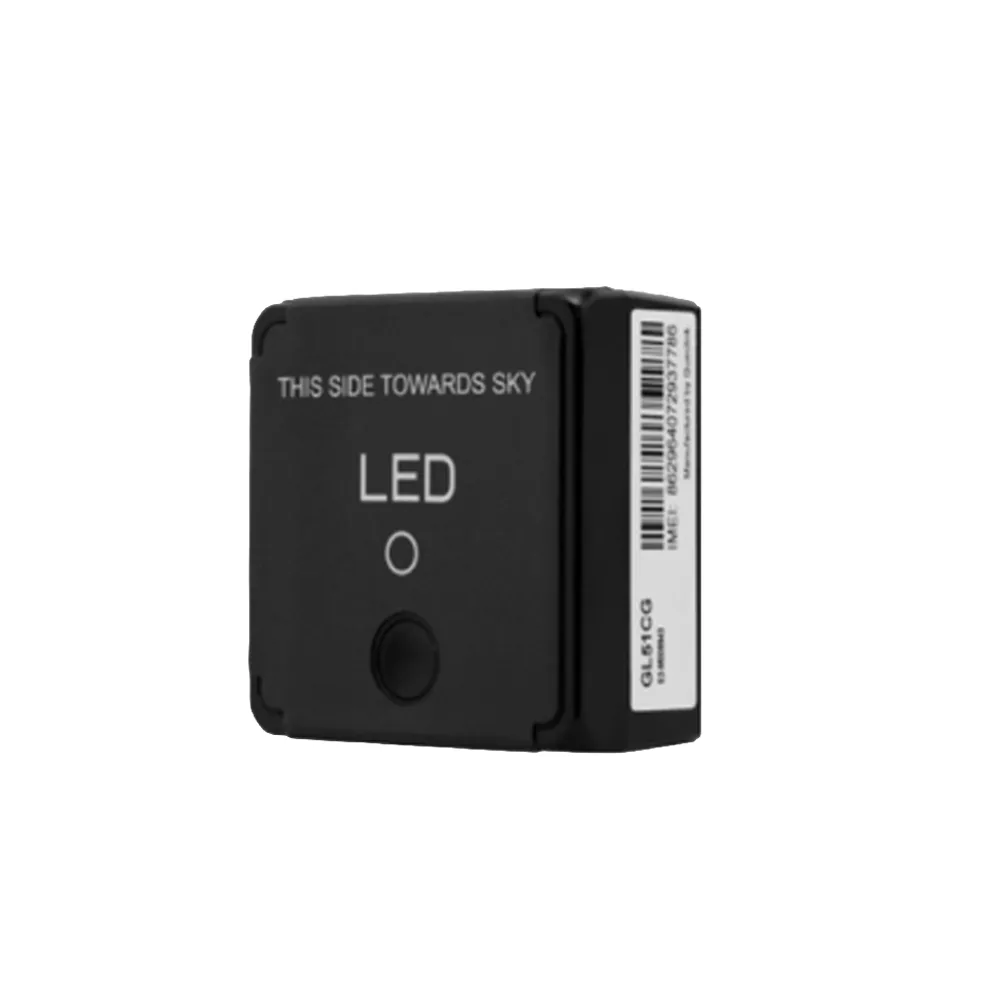
#1 Queclink GL51CG - Best for Long-Life Non-Powered Asset Tracking
Certified IoT Provider
GL51CG - Get The Best PriceThe Queclink GL51CG is available to buy from EasyNet Technologies, an authorised Queclink distributor.
The Queclink GL51CG is a compact GPS asset tracker with a 7,000mAh Li-MnO₂ internal battery delivering up to 2,160 days standby at one daily report in power saving mode – approximately 5.9 years from a single non-rechargeable charge. It uses LTE Cat 1 connectivity across bands B1 through B28 including UK Band 20, Bluetooth 5.4 for zone detection, and is certified FCC, CE, and RoHS. Its covert form factor (58 × 57.2 × 25.9mm, 102g) suits Stolen Vehicle Recovery, shipping containers, trailers, agricultural machinery, and other non-powered assets where discreet installation matters. EasyNet Technologies supplies the GL51CG from London stock as an authorized Queclink distributor.
Why it stands out: High-capacity batteries allow long-term tracking without external power, and the GL51CG shows this clearly. Deploy it, and you will not need to check it again for nearly six years. Key features of GPS asset trackers include hidden theft recovery and regular tracking – the GL51CG delivers both.
Advanced GPS asset trackers offer tamper and movement alerts, and the GL51CG includes both via its accelerometer. Real-time alerts are crucial for theft security in asset trackers, and the Cat 1 protocol enables rapid location bursts when a motion trigger fires.
- Power Saving, 1 report/day
- 2,160 days
- Power Saving, 1 report/hour
- 178 days
- Continuous, no reporting
- 90 days
- Continuous, 5-minute reporting
- 16 days
- Compact design
- 58 × 57.2 × 25.9mm, 102g
- Platform-agnostic
- @Track protocol, Wialon/Navixy compatible, MQTT
- Li-MnO₂ 7,000mAh non-rechargeable battery – deploy and forget
- LTE Cat 1 with UK Band 20 confirmed – higher throughput for rapid location bursts during theft recovery
- BLE 5.4 – zone entry/exit detection without a full cellular ping
- Five-constellation GNSS (BDS, GPS, Galileo, GLONASS, QZSS) – ≤2.0m CEP location accuracy
- No IP rating stated in the datasheet – confirm with supplier before exposed outdoor deployment
- When battery depletes (~5.9 years), the entire unit is replaced. No charging port, no field-swappable cells
- LTE Cat 1 consumes more power than LTE-M in sleep modes
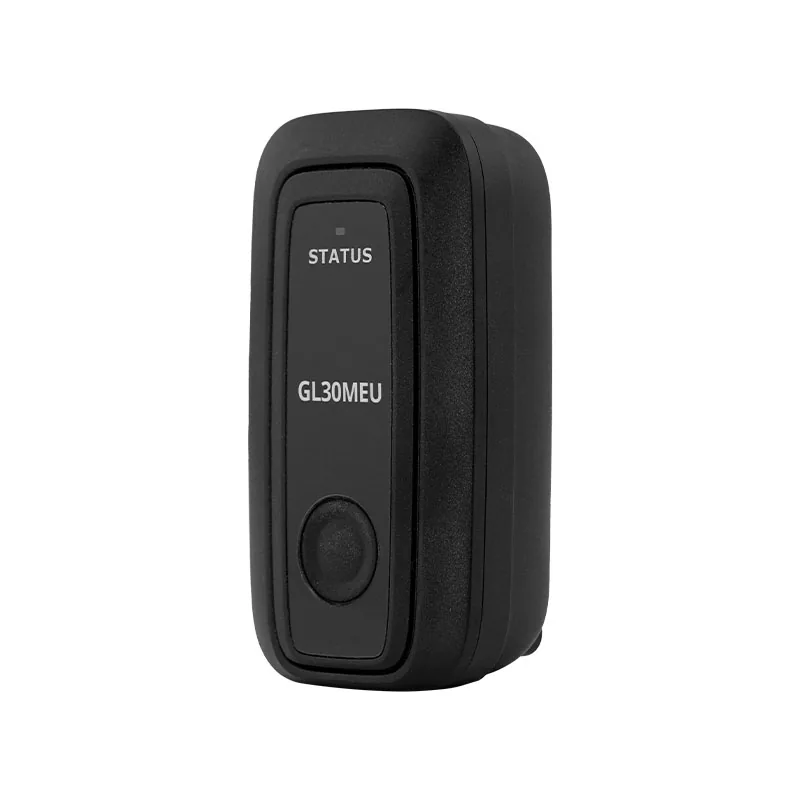
#2 Queclink GL30MEU - Best for Trailers and Containers (Rechargeable + eSIM)
Certified IoT Provider
GL30MEU - Get The Best PriceThe Queclink GL30MEU is available to buy from EasyNet Technologies, an authorised Queclink distributor.
The Queclink GL30MEU is a compact device using LTE Cat M1 and NB-IoT (NB2) connectivity with 2G fallback, designed for trailers, containers, and non-powered assets. Its 650mAh Li-Polymer battery charges via 5V DC and achieves up to 190 days standby at one daily report in power saving mode. It is IP67-rated, carries an embedded eSIM (MFF2) for simplified SIM provisioning, and includes Wi-Fi scanning for indoor positioning. EasyNet Technologies supplies the GL30MEU from London stock as an authorized Queclink distributor.
Why it stands out: The embedded eSIM means you don’t have to insert a physical SIM card into each device. Fleet managers can activate and manage connectivity for all trackers remotely. Wi-Fi scanning at 2.4GHz allows tracking assets indoors, such as inside warehouses or depots, where GPS signals may be weak or unavailable.
- Power Saving, 1 report/day
- 190 days
- Power Saving, 1 report/hour
- 16 days
- Continuous, 5-minute reporting
- 5 days
- LTE Cat M1 / NB2
- lower power during sleep than Cat 1 – suited for containers reporting daily
- IP67
- dustproof, submersion to 1m for 30 minutes – waterproof housing for UK conditions
- Geofencing
- up to 20 internal zones; geofencing alerts notify users when a vehicle moves outside a set area
- Rechargeable 650mAh Li-Polymer, 5V DC charging – return to depot cycle
- LTE bands B1/B3/B8/B20/B28 – Band 20 confirmed
- Wi-fi scanning for indoor positioning
- BLE 5.2 for zone detection
- Weighs just 37.6g – lightest tracker in this guide
- Requires charging infrastructure; frequent recharging needed if reporting more than once daily
- Shorter extended battery life compared to non-rechargeable options
- CE certification listed as “Planning” in datasheet – confirm status before procurement
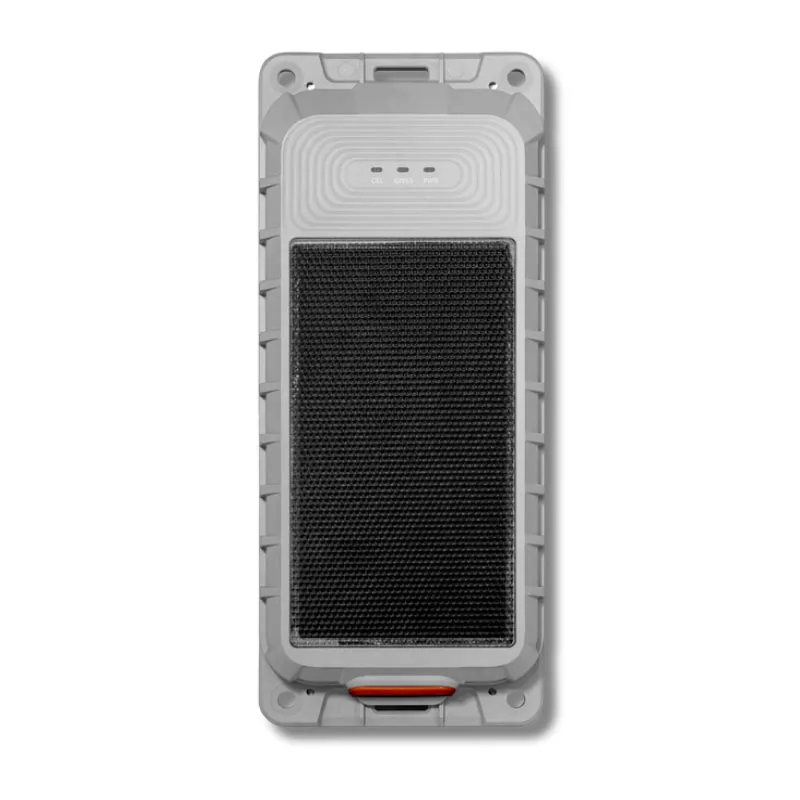
#3 Queclink GL601CEU - Best Solar-Powered Asset Tracker for Containers and Trailers
Certified IoT Provider
GL601CEU - Get The Best PriceThe Queclink GL601CEU is available to buy from EasyNet Technologies, an authorised Queclink distributor.
The Queclink GL601CEU is a rugged solar-powered LTE Cat 1 asset tracker designed for containers, trailers, and rail wagons. It carries a 12,000mAh rechargeable battery (6 × ICR18500 lithium cells) and an integrated solar panel, enabling zero-maintenance operation for up to 10 years when the device receives regular solar charging. Without solar input, the battery supports up to 5 years at one daily report. It is IP67-rated, weighs 572g, and mounts via screw, magnet, or steel cable. EasyNet Technologies supplies the GL601CEU from UK stock as an authorized Queclink distributor.
Why it stands out: This is the only solar-powered tracker in this guide. The solar panel continuously harvests ambient light to top up the battery – on a container roof or trailer with regular sunlight exposure, the power source sustains itself indefinitely without a charging visit or battery swap.
- Sleeping, 1 report/hour
- 5 months
- Sleeping, 1 report/day
- 5 years (no solar)
- Sleeping, 1 report/day (with regular solar)
- 10 years
- Solar + 12,000mAh battery
- the longest potential battery life in this guide
- LTE Cat 1 + 3G + 2G fallback
- B1/B3/B7/B8/B20/B28 – Band 20 confirmed
- Multi-constellation GNSS
- GPS/BeiDou/GLONASS/AGPS, <2.0m CEP
- Temperature monitoring
- onboard sensor reports ambient temperature – relevant for refrigerated cargo
- Platform-agnostic
- MQTT, TCP, UDP, SMS
- Large unit
- 212 × 86 × 30mm, 572g – not a covert device
- Continuous, 1 report/minute (2 working hours/day): 80 days
- BLE 5.0 gateway – connects to beacons, temperature sensors, door sensors
- Tamper detection via light sensor
- IP67 rated, operating range −20°C to +70°C
- Solar performance in the UK varies significantly by season; shaded deployments reduce efficacy
- CE certification listed as “Planning” – confirm before procurement
#4 Digital Matter Oyster3 - Best for Long-Life Outdoor Assets with Replaceable Batteries
The Digital Matter Oyster3 is a cellular GPS asset tracker using LTE-M (Cat-M1) and NB-IoT, powered by three user-replaceable AA batteries delivering up to 10 years of life at one daily location update. Unlike devices with fixed internal batteries, the Oyster3’s AA cells are swapped in the field when depleted – the tracker hardware has indefinite operational life. It carries IP68 and IK07 ratings for submersion and impact resistance, and is platform-agnostic via TCP Direct and HTTPS Webhook. The Oyster3 is available through Digital Matter’s reseller network – not currently stocked by EasyNet Technologies.
Why it stands out: Battery-powered trackers can last up to 12 months on a single charge in many consumer products, but the Oyster3 pushes that to 10 years with lithium AA cells. When they deplete, you swap the cells without removing the device from the asset.
Battery life estimates:
- 1× daily
- 10 years
- Movement-based (2hrs/day, 5 days/week)
- 6 years
- 1× hourly
- 3.5 years
- Sony CXD5612 GNSS
- GPS/GLONASS/Galileo/BeiDou concurrent, ~2m CEP, SAW filter + LNA
- IP68 + IK07
- submersion and impact resistance for harsh environments
- Adaptive tracking
- increases update rate when moving, conserves battery when stationary
- 3× AA replaceable cells (Lithium or Lithium Thionyl Chloride)
- LTE-M / NB-IoT with Band 20 confirmed
- Theft recovery mode, tip detection, rotation counting, run hour monitoring
- AES-256 encryption; 2-year manufacturer warranty
- Not stocked by EasyNet Technologies – sourced through Digital Matter resellers
- No Wi-Fi scanning for indoor environments
- Larger form factor (166g with batteries) than some alternatives
- Battery life estimates:
#5 Digital Matter Barra Edge - Best for Indoor/Outdoor Mixed Environments
The Digital Matter Barra Edge is a low-profile LTE-M (Cat-M1) and NB-IoT asset tracker powered by two user-replaceable AA batteries with up to 10 years battery life at one daily update. It is positioned for indoor and outdoor use: location is resolved using GNSS (open areas), Wi-Fi access point scanning (indoor/urban), and cell tower fallback – covering environments where GNSS is unavailable. It carries IP68 and IK07 ratings and is platform-agnostic via HTTPS Webhook. The Barra Edge is available through Digital Matter’s reseller network.
Why it stands out: Three-layer location system handles the indoor/outdoor gap that pure GNSS portable gps trackers cannot bridge. If your assets move between outdoor yards and warehouses, this is the device to consider.
Battery life estimates:
- 1× daily
- 10 years
- Movement-based (2hrs/day, 5 days/week)
- 5 years
- 1× hourly
- 3 years
- GNSS
- Semtech LR1110, GPS + BeiDou concurrent
- Magnetic activation
- removing the external magnet activates the device – enables pre-provisioning
- Wi-fi scanning for indoor positioning (~10–100m in urban/indoor environments)
- 2× AA user-replaceable (Lithium only) – lighter at 104g vs Oyster3’s 166g
- LTE-M / NB-IoT with Band 20 confirmed
- IP68 + IK07
- AES-256 encryption; 2-year manufacturer warranty
- Fewer GNSS constellations than the Oyster3 (GPS + BeiDou only vs four constellations)
- Does not return speed or heading data – a scanning technology limitation
- Some trackers offer historical playback to view past trips, but speed alerts and heading require GNSS-based motion – verify with Digital Matter if this matters for your use case
- Battery life estimates:
#6 Ruptela Asset5 - Compact 4G with BLE 6.0 and IP68
Ruptela is a Lithuanian IoT hardware manufacturer across EMEA fleet telematics. The Asset5-LTE-EMEA variant supports LTE Cat1.bis B1/B3/B5/B7/B8/B20/B28 with 2G fallback – Band 20 confirmed.
Why it stands out: BLE 6.0 is the newest Bluetooth standard available in any device in this guide. LTE Cat1.bis is a single-antenna Cat 1 variant delivering lower power consumption than traditional Cat 1 while maintaining higher throughput than LTE-M – a useful middle ground for equipment tracking requiring regular position reports.
- GNSS
- GPS, GLONASS, Galileo, BeiDou, QZSS, SBAS – 1.5m accuracy, −166dBm sensitivity
- Certifications (EMEA)
- WEEE/RoHS/CE/RCM
- BLE 6.0 for configuration via mDMP mobile app and peripheral connectivity
- 2× ER14505M LiSOCl₂ replaceable primary cells, 3.6V, 2,100mAh – up to 3 years autonomy
- IP68 rated – alongside Oyster3 and Barra Edge, the highest in this guide
- Operating temperature −30°C to +70°C – widest range in this guide
- 3-axis accelerometer, tamper detection, 1,920 position records internal memory
- TLS 1.2 end-to-end encryption
- Shorter 3-year battery life compared to Oyster3/Barra Edge at 10 years
- Requires specific ER14505M cells – standard AA alkalines are not compatible. Replacement batteries (Asset5-Battery) are orderable from Ruptela as a 30-pack
- Less name recognition in UK than Teltonika or Queclink
#7 Teltonika ATC700 - Compact Rechargeable with UKCA Certification
Teltonika is an IoT hardware manufacturer in Europe. The ATC700 is their mini asset tracker: rechargeable 1,000mAh Li-Po battery, LTE Cat 1, and very compact at 62.2 × 54.2 × 20.3mm and 71g.
Why it stands out: The ATC700 offers a compact rechargeable design with a robust LTE Cat 1 connection and 2G fallback, ensuring reliable coverage across UK networks. Its versatile power options, including USB Type-C charging and support for external power banks, provide flexibility for various deployment scenarios. The device’s multi-action button allows configurable tracking activation or panic alerts, making it suitable for workforce and tool tracking applications.
- GNSS
- GPS/GLONASS/Galileo/BeiDou – <1.8m CEP, 135 channels
- Datasheet date
- May 2026 – most recently released device in this guide
- UKCA certified – confirmed post-Brexit UK compliance
- EU variant LTE FDD B1/B3/B5/B7/B8/B20/B28 – Band 20 confirmed
- USB Type-C charging + external power bank support for extended operation
- Multi-action configurable button (tracking activation or panic)
- 128MB internal flash memory; Nano-SIM
- IP65 internally tested only; IP68 listed as “in development.” Not suitable for prolonged submersion
- Rechargeable means regular charging visits or power bank management
#8 Jimi IoT LL702 - Magnetic-Mount with Large Fixed Battery
Jimi IoT is a Chinese IoT hardware brand. The LL702 is marketed for car rental, auto finance, and used car businesses – a consumer/fleet-adjacent product also used for generic asset tracking and vehicle tracking.
Why it stands out: A strong magnetic base installs on any metallic surface without tools – useful for quick deployment on plant machinery, fleet vehicles, or containers. The process is fairly straightforward: place, activate, and track.
- Dimensions
- 80 × 45 × 31.4mm, 145g
- GNSS
- GPS, BDS, LBS only – <2.5m CEP. No Galileo or GLONASS, fewer constellations than every other device in this guide
- 4,200mAh Li-MnO₂ industrial-grade fixed battery – up to 3 years at low frequency
- LTE Cat 1 + 2G GSM fallback; EU variant B1/B3/B5/B7/B8/B20/B28 – Band 20 confirmed
- Magnetic installation with no tools or mounting hardware
- Tamper detection via light sensor
- 400 GPS data entries internal storage for location history
- IP54 – this is a critical limitation. IP54 offers protection against dust ingress and water splashing only. It is not waterproof, not suitable for submersion, and not rated for heavy rain. In UK outdoor conditions on exposed trailers or construction sites, IP54 falls significantly short of IP67/IP68.
- No Bluetooth, no Wi-Fi scanning
- Best suited for sheltered indoor assets, covered vehicles, or deployments protected from direct weather exposure
- Non-rechargeable, non-replaceable battery – device replacement on depletion
Also Worth Mentioning
Teletrac Navman AT301: Teletrac Navman is one of the most established fleet management companies in the UK. The AT301 is their battery-powered asset tracker for tools, small assets, and non-powered equipment. It is platform-tied – hardware and software from a single vendor. When appropriate: organizations already on the Teletrac Navman platform seeking a single-vendor solution. No datasheet was available for independent verification at the time of writing – specs should be confirmed at teletracnavman.co.uk. This guide has reviewed independently sourced products with published datasheets and open protocol support.
How to Choose the Right GPS Asset Tracker
The choice of installation method influences the installation and mounting process of trackers. Before committing at scale, evaluate three axes.
Your deployment duration determines the right power source:
The long battery life of non-rechargeable and solar devices reduces total cost of ownership on rental fleets and remote assets where site visits are expensive.
Choose Based on Connectivity Needs
Geofencing alerts notify when a vehicle enters or exits an area, and the quality of those geofence alerts depends directly on both location accuracy and cellular reliability.
Days/weeks between maintenance
Rechargeable devices (GL30MEU, ATC700). Charge like a phone, return to depot.
Up to 6 years, then replace the device
Non-rechargeable fixed battery (GL51CG). No charging, no cell swaps.
Zero maintenance with sunlight
Solar (GL601CEU). No battery swap, no charging visits.
Multi-year, then swap cells in the field
User-replaceable (Oyster3, Barra Edge, Asset5). Indefinite hardware life.
Indoor/outdoor mixed (warehouses, depots, yards)
Choose a device with Wi-Fi scanning – Barra Edge, GL30MEU, or GL601CEU. Pure GNSS devices cannot establish a vehicle’s location or an asset’s position indoors.
Covert installation on small assets
GL51CG (102g), ATC700 (71g), or GL30MEU (37.6g). A compact device fits behind panels, inside housings, or on personal belongings and high value assets.
LTE Cat 1 (GL51CG, GL601CEU, ATC700, Asset5)
Higher data throughput. Suits SVR applications and live location bursts. GPS trackers typically report location every 15-60 seconds in active mode.
UK Band 20 (800 MHz)
All eight devices confirm B20 support. US-market devices often omit B20 and will not perform reliably on UK networks. Geo-fencing enables asset trackers to alert when an item leaves a designated area – but only if the cellular connection is stable.
Which GPS Asset Tracker Is Best for You?
For Queclink devices (GL51CG, GL30MEU, GL601CEU), EasyNet Technologies supplies from London stock with full manufacturer warranty.
- Choose the GL51CG if you need 5+ years of maintenance-free operation on non-powered assets that sit in remote locations
- Choose the GL601CEU if your assets receive regular sunlight exposure and you want zero-maintenance gps tracking for up to a decade
- Choose the Oyster3 if you prefer field-replaceable batteries and the highest IP rating with four-constellation GNSS
- Choose the GL30MEU if you have depot charging infrastructure and need indoor/outdoor location updates with eSIM provisioning
- Choose the Barra Edge if your assets move between outdoor sites and indoor warehouses
Five Things UK Buyers Should Check Before Purchasing
- Confirm UK LTE band support before ordering. Band 20 (800 MHz) is essential for UK network coverage – especially in rural areas. All eight trackers in this guide include B20. Services referenced as “US-only” or “North America” models will likely omit it.
- Understand the battery architecture before committing at scale. Non-rechargeable fixed (GL51CG: replace the device after ~6 years), rechargeable (GL30MEU, ATC700: return to depot or charge in situ), solar (GL601CEU: self-sustaining with sunlight), user-replaceable cells (Oyster3, Barra Edge, Asset5: swap batteries in the field). Whether the device needs frequent updates or daily reports drives your maintenance model.
- Check IP rating for your deployment environment. IP68 (Oyster3, Barra Edge, Asset5) and IP67 (GL30MEU, GL601CEU) are suitable for outdoor UK conditions. IP65 (ATC700 – internally tested) offers less protection. IP54 (LL702) is splash protection only – not suitable for exposed outdoor deployment. Devices with no stated IP rating (GL51CG) should be confirmed with the supplier.
- Verify indoor location needs. If assets move between outdoor and indoor environments (warehouses, distribution centres), choose a device with Wi-Fi scanning: Barra Edge, GL601CEU, or GL30MEU. Pure GNSS devices cannot locate assets indoors – you will lose location visibility entirely.
- Platform-agnostic vs. platform-tied. All eight devices in this guide support open protocol integration. You choose your own fleet management software, your own SIM provider, and your own data platform. If you consider a Teletrac Navman device (see below), understand that switching platforms means replacing hardware. Apple’s Find My network (used by Apple AirTag) is similarly closed – the best gps tracker for business use connects to your existing platform, not a consumer ecosystem. For reliable and authorized hardware options, explore Queclink GPS trackers supplied by EasyNet Technologies, a trusted UK distributor.
Add h2
What is the best GPS asset tracker for UK businesses?
The best GPS asset tracker depends on the application. For non-powered assets needing years of unattended operation, the Queclink GL51CG (7,000mAh, 2,160 days at daily reports, LTE Cat 1) is available from EasyNet Technologies’ London stock. For container or trailer fleets where solar energy is available, the Queclink GL601CEU provides zero-maintenance tracking for up to 10 years. For field-replaceable batteries, the Digital Matter Oyster3 runs 10 years on three AA cells with IP68 weatherproofing. All three are platform-agnostic.
Yes – cellular GPS asset trackers transmit location data via mobile networks, which requires a SIM card and data plan. The hardware cost and the SIM/subscription cost are separate budget lines. None of the eight devices in this guide lock you to a proprietary software platform – you choose the SIM provider and fleet management software independently. UK data plan costs for low-frequency IoT devices typically range from £2–£10 per device per month depending on data volume and provider. For context, subscription costs in the consumer market range from $5 to $25 per month, while wired cellular GPS services cost $30 to $50 per month. In consumer products, AirTag plus Airpinpoint costs $29 plus $11.99 per device monthly – a monthly fee that adds up across a fleet. Consumer-level costs like Tracker Nano at £42 per year reflect insurance-tied products, not B2B IoT data plans.
LTE Cat M1 (LTE-M) is optimized for low-power IoT devices reporting infrequently – suited to battery-powered trailers or containers where maximizing sleep time extends battery life. LTE Cat 1 delivers higher data throughput and suits SVR applications where a rapid location burst on theft trigger is needed. In this guide: GL30MEU, Oyster3, and Barra Edge use LTE-M; GL51CG, GL601CEU, ATC700, and Asset5 use LTE Cat 1. Fuel consumption of data bandwidth is a useful analogy – Cat M1 sips, Cat 1 gulps, but Cat 1 delivers location updates faster when it matters. Neither protocol reports engine data or engine hours – those require wired trackers connected to a vehicle’s diagnostic bus. Fuel levels similarly require hardwired OBD II or CAN bus integration.
Bluetooth tags such as Apple AirTags and similar products rely on proximity networks – they only estimate location when a compatible device or gateway is nearby. Apple AirTag is a low-cost option with no subscription fees and has a battery life of up to one year, but it cannot track assets independently at remote sites or in transit. A car’s location can be estimated only when another Apple device passes nearby. Cellular GPS trackers with their own SIM card – such as those in this guide – report location via mobile networks independently and work anywhere with cellular signal. Push notifications from cellular trackers arrive regardless of proximity – unlike Bluetooth-based tags.
Yes. AirTag uses apple’s find My network and only reports location when an Apple device is nearby – unsuitable for assets at remote sites or in transit. Any cellular GPS tracker in this guide operates independently: it has its own SIM, connects to mobile networks, and reports location from anywhere with cellular signal. For UK businesses, the Queclink GL51CG (battery-powered, 5.9 years standby) and Digital Matter Oyster3 (10-year replaceable battery) are purpose-built for long-term independent asset tracking. Both provide live tracking and can display location history on platforms that integrate with Google Maps. Consumer products like the best budget Bluetooth tags serve personal belongings, not business assets.
Yes. Tracking your own business assets – trailers, containers, tools, machinery – is legal in the UK. Tracking company vehicles used by employees requires UK GDPR compliance: employees must be informed tracking is in use, data must be processed proportionately, and retention periods defined. The ICO publishes guidance on employee monitoring at ico.org.uk. Tracking assets belonging to others without consent is illegal. For a vehicle tracker deployed on fleet vehicles, ensure your data protection policy covers the scope and purpose of location tracking.
- What is the best GPS asset tracker for UK businesses?
- Do GPS asset trackers require a monthly subscription in the UK?
- What is the difference between LTE Cat M1 and LTE Cat 1 for asset tracking?
- Can GPS tags be used for asset tracking?
- Is there a better GPS tracker than AirTag for business assets?
- Are GPS asset trackers legal to use in the UK?
Need a shortlist for your site?
Send the application, the required interfaces and the delivery market. The team in Vilnius and London will confirm the models that fit.